Specialized just killed the Epic Evo. Also the Epic World Cup. Also the Epic 8. They are all the Epic 9 now.
Sort of. Maybe. We don’t really know.
The Epic 9 launched on April 28 as the only Epic in Specialized’s new lineup. Officially it replaces three SKUs: the Epic 8, the Epic 8 Evo, and the Epic World Cup. Practically, you can still walk into a Specialized dealer today and buy an Epic 8 Evo off the floor. Whether you’ll be able to in six months is an open question.
The bike Specialized wants to sell you is, by their measurement, the lightest XC race bike ever made: a 1,589g claimed frame and an 8.5 kg complete S-Works Ultralight LTD on top. Build ladder runs $7,500 to $15,250 of unicorn tears.
What changed
Geometry barely moves. Head angle, seat angle, and chainstays come within a degree or millimeter of the Epic 8. The frame is 206g lighter, the suspension friction drops 11% across the system, and the leverage rate at sag is lower for pedaling.
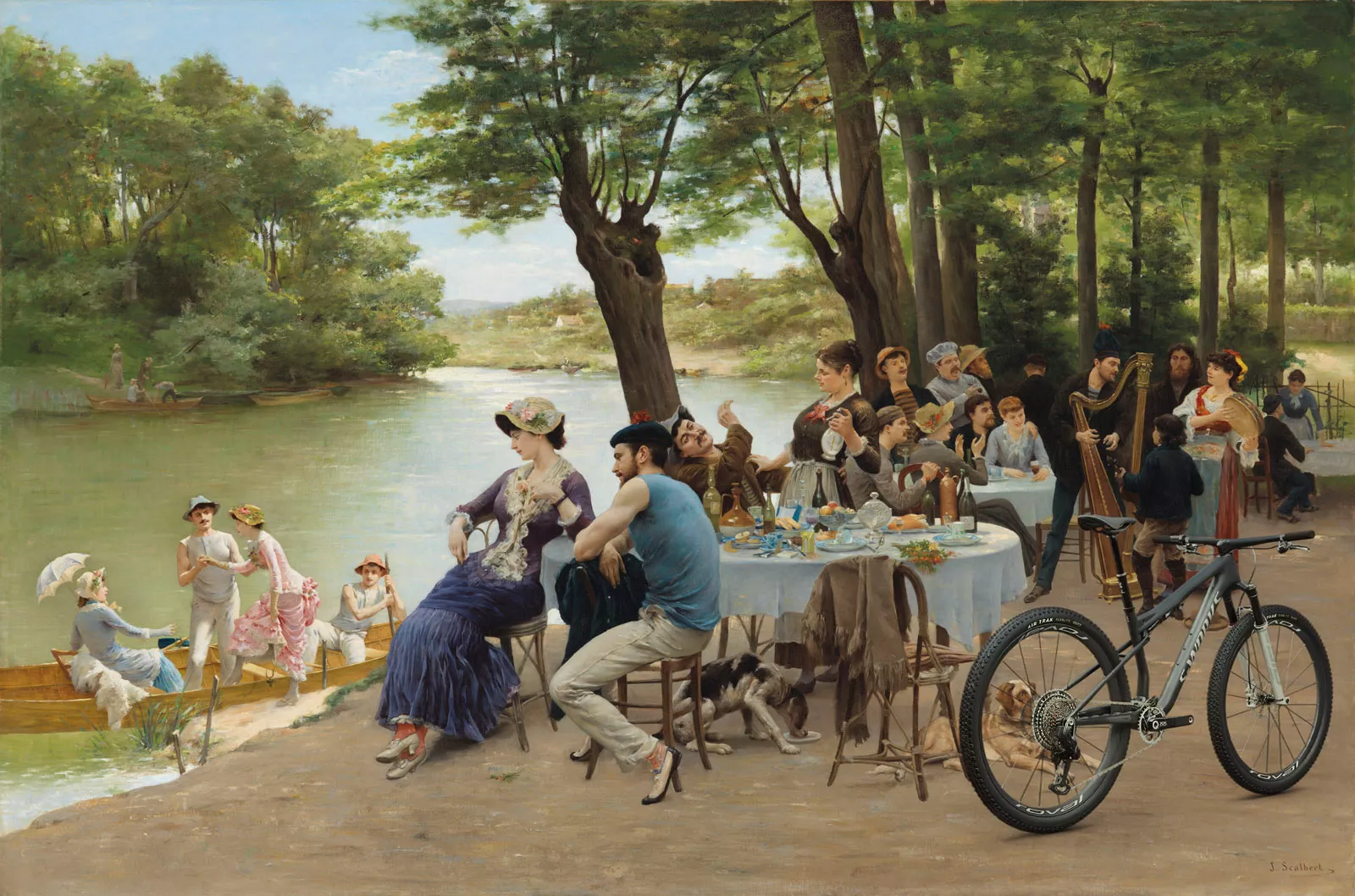
The bigger story is what got removed. Internal storage is gone, replaced by an external SWAT Box because the Factory Team apparently asked for it back. What does an external SWAT box look like? This. Kind of cheap. Cable routing is through the headset. (You thought that was dead in 2026. You thought wrong.) Drivetrain is wireless-only across every build kit. None of those are bad calls for a race bike. They are all bad calls for the rider who liked the Evo’s looser, aftermarket-friendly, “I might want to put a coil shock on this someday” character.
The frame does support a 130mm fork. Bolt one on and you have, geometry-wise, an Epic 9 Evo. You will just be doing it yourself. Not buying it from your specalized dealer as a build kit. As far as we know. For now. Maybe forever.
Where’s the Evo?
Officially, nowhere yet. The Epic 8 Evo is still on Specialized’s website. There is no “discontinued” stamp, no clearance pricing, no “Evo era is over” press release. There is an Epic 9 launch with no Evo variant attached, and an Epic 8 Evo that is still being sold next to it.
Specialized’s Jason Schroeder said in thier launch PR: “Just Epic 9 going forward.” Say it ain’t so Jason.
Pinkbike commenters (the wisest and most informed source of bike commentary on the internet) have several theories. Maybe Specialized read the room and decided the downcountry segment is too crowded to bother with right now. Maybe an Epic 9 Evo lands in twelve months once the racers have had their moment. Maybe a refreshed Stumpjumper ST. Maybe the Camber name comes back. Maybe nothing.
What the rides actually say
Pinkbike titled their first ride “Unapologetically Race-Focused,” which is the headline doing the work: this is the race bike, no Evo softening, no apology for committing to the lane.
Bikerumor’s Jordan Villella, who has raced one Epic or another for the last decade, sounds less surprised. The three-position rear damping still does what it did on the Epic 8. The 11% suspension friction reduction is something he says you actually feel on bumpy ground. Villella said the harder problem is the one only racers think about: a bike that wins the scale but loses composure on a rough course is not really winning much. Specialized, in his read, did not make that trade.
Neither rider mentions the missing Evo. They are reviewing the bike Specialized launched, which is the bike Specialized wants reviewed.
Our UPS package with a return address from Specialized’s HQ hasn’t shown up yet. We’ll let you know when it gets here.
Is Specialized saying “downcountry is dead”
We don’t think so. Maybe it was never alive. Maybe this was all a dream. Maybe Specialized is going to bolt whatever fork on whatever frame the sales data tells them to. (When we got our Epic 8 Evo last year, it was an awfully good deal.)
For now we are keeping the Epic 8 Evo in the database and adding the Epic 9 alongside it. If Specialized officially discontinues the 8 Evo, things change. If a 9 Evo materializes in twelve or eighteen months, things change again. If the long-term answer turns out to be “an Epic 9 with a 130mm fork is the new Evo, no SKU required,” that is also fine, and on-brand for a category that has always been more of an argument than a product.
We’ll see.